
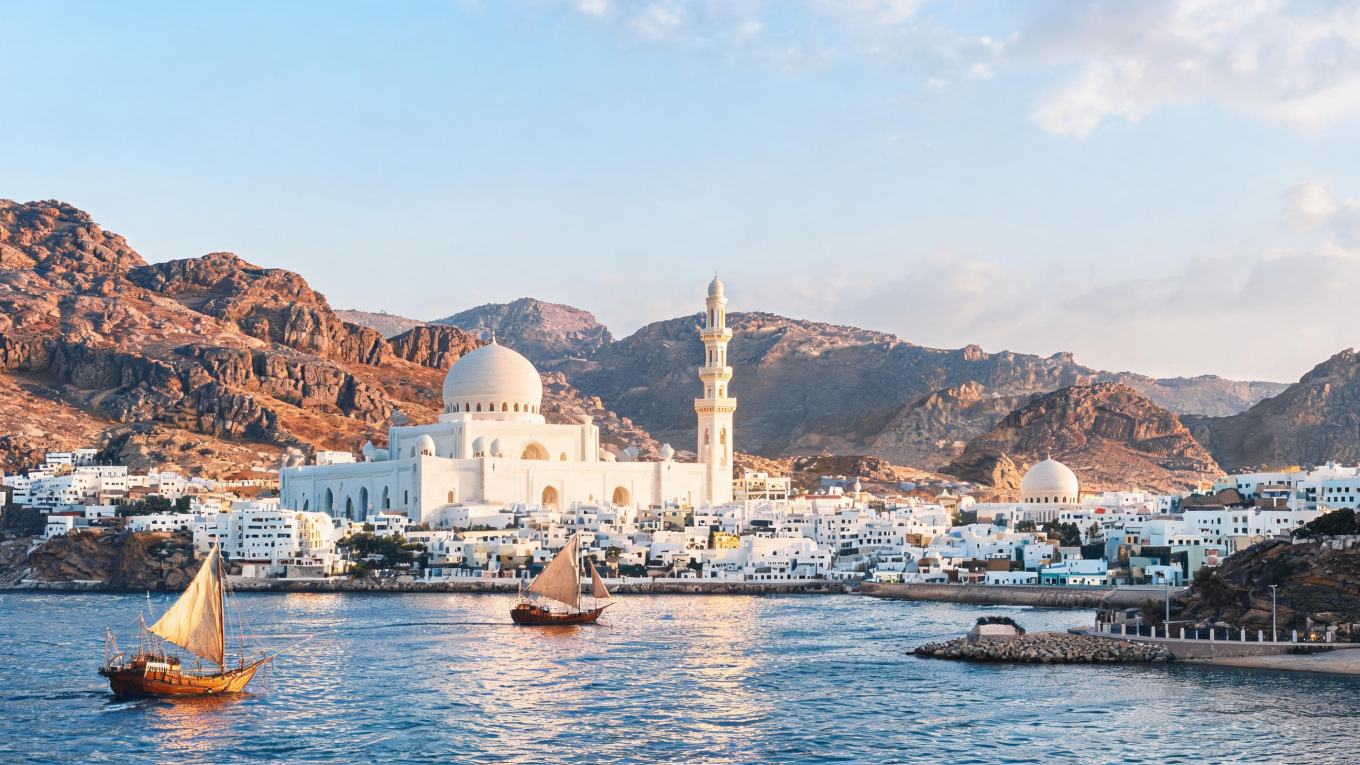
Overview and Best Season: The Gentle Confluence of Desert and Sea
As the capital province of Oman, Muscat Province blends Arab tradition with modern civilization in the form of a pearl in the Gulf. It features the millennia-old fish market at Muttrah Port, the grand dome of Sultan Qaboos Grand Mosque, and boasts stunning landscapes of the Arabian Sea and the Hajar Mountains. The climate is warm throughout the year, but the best travel season is from October to April, with daily temperatures ranging from 22-28°C. Avoid the summer heat exceeding 50°C and sandstorms, making it particularly suitable for outdoor exploration.
Transportation Arrival and In-City Movement: A Three-Dimensional Connectivity by Sea, Land, and Air
International Transportation
Muscat International Airport (MCT) is a major hub in the Middle East, with direct flights to cities like Dubai, Doha, and Istanbul operated by over 20 airlines including Oman Air and Qatar Airways. Travelers departing from China need to transfer in Dubai or Doha, with total flight time approximately 10-15 hours.
In-City Transportation
- Taxis: Starting fare is 0.5 Omani Rial (about 9 CNY). It is recommended to use reputable companies like Marhaba Taxi, with an additional 50% charge at night.
- Private Car Services: Through certified local tour operators such as HeroGuide, you can book 4-seater cars or 7-seater vans, supporting both competitive bidding and fixed-price models, ideal for family or small group deep tours.
- Public Buses: Mwasalat routes cover major attractions, with a single trip costing 0.5 Omani Rial, but bus frequency is low and lacks English signage, so it's advisable to use Google Maps for navigation.
Must-Experience Attractions: A Dialogue Between Tradition and Modernity Across Time and Space
Muscat Old Town (Muttrah)
- Muttrah Coral Fish Market: A millennia-old fish market that opens at 5 AM, where you can watch fishermen auction off tuna and grouper, with nearby restaurants offering freshly caught and cooked seafood.
- Muttrah Fort: A military fortress built by the Portuguese in 1587. Climbing to the top offers panoramic views of the bay, and traditional music performances are held every Thursday evening.
- Muttrah Souq: One of the oldest spice markets in the Middle East, filled with handcrafted souvenirs like frankincense, saffron, and Arabic coffee pots. Remember to bargain to 30%-50% of the listed price.
Modern Landmarks Area
- Sultan Qaboos Grand Mosque: The third-largest mosque in the world, capable of accommodating 20,000 worshippers. Its white marble and 24K gold decorations create a stunning contrast. Women must cover their heads when entering.
- Royal Opera House: The first professional opera house in the Middle East, its architecture resembles an Arab dhow sailing on the sea. Free guided tours are available every first Friday of the month.
- Qurm Beach: A favorite sunset spot among locals, with fine sand resembling powder. Nearby cafes offer Arabic sweets and mint tea.
Natural Wonders in the Surroundings
- Wadi Shab Canyon: Located about 1.5 hours from the city center, requiring a hike through streams and rocky terrain. The destination is a hidden natural pool within a cave, so it's recommended to wear non-slip shoes.
- Bimmah Sinkhole: A limestone sinkhole formed by groundwater erosion, featuring emerald-colored water. Swimming and jumping into the water are allowed, with picnic areas nearby.
- Nakhal Fort: A desert castle built in the 17th century. Climbing the walls offers a view of the Hajar Mountains, and there's a camel market every Friday.
Local Cuisine: A Gastronomic Feast from the Gulf to the Desert
- Harees: Oman's national dish, made by slow-cooking wheat and lamb for 12 hours until it becomes a paste-like consistency. Served with dates and clarified butter, highly recommended at Al Alam restaurant in the old town.
- Mashuai: Whole grilled mackerel served with lemon rice. The skin is crispy while the flesh is tender and fresh. The version at Sultan's Table restaurant has won international culinary awards.
- Halwa: An Arabic dessert made with saffron, rose water, and nuts, with a texture similar to jelly. Al Mawalah confectionery shop offers试吃装 (tasting packs) of 12 different flavors.
- Kahwa: Arabic coffee, brewed fresh in a small copper pot and enjoyed with dates. Available at small stalls near the fish market for 3 Omani Rials per cup.
Recommended Accommodation Areas: From Luxury to Budget-Friendly Options
- Shatti Al-Qurm Area: Adjacent to the Royal Opera House and Qurm Beach, this area is home to international brands like Shangri-La and Kempinski, perfect for travelers seeking a luxurious experience.
- Muttrah Old Town: Boutique guesthouses housed in renovated coral houses, such as Beit Al Bahr, located within walking distance of the fish market and fort, though it can be noisy at night.
- Al Khuwair Area: A residential neighborhood popular with locals, featuring budget-friendly chain hotels like City Seasons. Nearby supermarkets and affordable restaurants make it ideal for backpackers on a tight budget.
3-Day Itinerary: A Perfect Balance of Classic and Off-the-Beaten-Path Experiences
Day 1: Cultural Tour of the Old Town
Muttrah Fort (2 hours) → Coral Fish Market (1 hour) → Muttrah Souq (2 hours) → Sultan Qaboos Grand Mosque (1.5 hours) → Royal Opera House Exterior (30 minutes) → Sunset at Qurm Beach
Day 2: Nature Exploration Day
Hiking in Wadi Shab Canyon (4 hours, including round-trip transportation) → Swimming at Bimmah Sinkhole (1 hour) → Return to the city for a dinner of Mashuai grilled fish
Day 3: Desert Meets Sea
Nakhal Fort (2 hours) → Visit a traditional date farm on the way back (1 hour) → Experience Kahwa and Halwa at a café in Muttrah Old Town (1 hour)
Budget Tips and Avoiding Pitfalls
- Budget Reference: Mid-range accommodation + private car + meals, approximately 800-1200 CNY per person per day (excluding international flights).
- Avoid Pitfall 1: Drones are prohibited in mosques, government buildings, and other sensitive areas. Violators may face heavy fines.
- Avoid Pitfall 2: Renting a car requires an international driver’s license. Road signs in Oman are mostly in Arabic, so it's advisable to book a private car service with a driver through HeroGuide.
- Avoid Pitfall 3: During Ramadan (dates vary each year), eating in public places during daylight hours is prohibited. Restaurants only offer takeout services.
- Avoid Pitfall 4: Exchange currency at banks or authorized exchange points for better rates. Street exchanges may involve counterfeit money.


