
One-sentence summary: Madrid is not a city to be rushed through with a few landmarks; its essence lies in its world-class museums, royal plazas, and late-night taverns. Give it a full three days, and add a day trip to Toledo or Segovia, and you’ll truly understand Spain’s capital.
How many days to spend
Many people treat Madrid as a 'one-night layover' stop, which is a huge misunderstanding. Madrid’s city scale is compact, and the old town is walkable on foot, but it’s very dense—just the Prado, Reina Sofía, and Thyssen-Bornemisza museums alone can easily take a full day and leave you wanting more.
My advice: Two to three days for the city proper, covering the Royal Palace, the Golden Triangle of Art, Retiro Park, and the old town around Sol; if you’re interested in historic cities or Roman ruins, add a day for the outskirts (choose one from Toledo or Segovia, or both for four days). If you only have one day, skip the greed, stick to the Royal Palace, Prado, and old-town dinner—you’ll enjoy it more than rushing around. Madrid is hot in summer with intense midday sun; locals take a siesta from 2:00 PM to 5:00 PM, and many shops close. Plan your itinerary to follow this rhythm, and don’t fight the sun.
Must-see attractions
Royal Palace and Almudena Cathedral
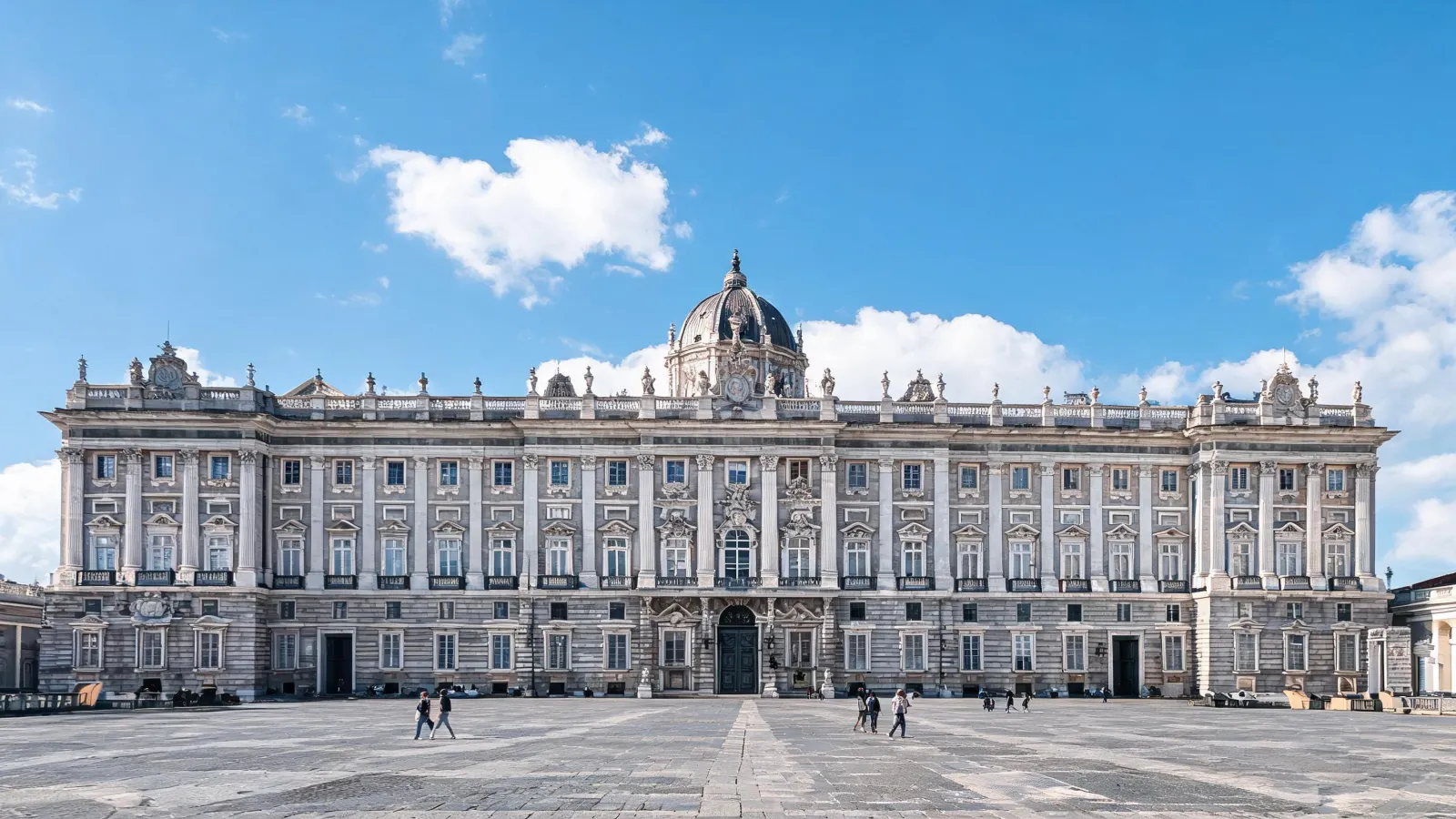
The Royal Palace of Madrid (Palacio Real) is one of the largest royal palaces in Europe, with over 3,000 rooms, about 50 open to the public. It is still used for official royal ceremonies, so it may close temporarily for state events—check the official website before you go. The Throne Room, Gasparini Room, and Royal Armory are worth a slow look, and the Stradivarius violin collection is a hidden highlight. Tickets are about 14 EUR (approx. 110 RMB, subject to official rates), with regular free entry times (usually in the evening), but those slots are extremely crowded, diminishing the experience. The Almudena Cathedral is right across from the palace—its exterior is solemn, but the interior features surprisingly modern stained-glass ceilings; entry is free (donations welcome), and climbing the dome costs extra. Schedule half a day for both, and it’s just right.
Puerta del Sol, Plaza Mayor, and Old Town
Puerta del Sol is Spain’s 'Kilometer Zero' point, with the famous bronze zero-kilometer plaque on the ground, and it’s the national focus for eating twelve grapes on New Year’s Eve. A few minutes’ walk takes you to Plaza Mayor, a red square surrounded by arcades that was once a stage for executions and bullfights, now home to outdoor cafés and street performers—a tip: restaurants under the arcades are pricey; grab a coffee for the atmosphere, but save your proper meal for the side streets. Don’t miss the nearby Mercado de San Miguel, a glass-and-iron building packed with tapas stalls—great for sampling, but also on the touristy side.
Prado, Reina Sofía, Thyssen—The Golden Triangle of Art
This is Madrid’s true soul. Three museums line the 'Art Walk' (Paseo del Arte), all within walking distance. The Prado is Spain’s national treasure trove, housing Velázquez’s Las Meninas, Goya’s 'Black Paintings' and The Third of May 1808, and Bosch’s The Garden of Earthly Delights—you won’t finish in under two to three hours. Reina Sofía focuses on modern and contemporary art, with Picasso’s massive Guernica as the centerpiece, plus Dalí and Miró. Thyssen-Bornemisza is like a condensed history of Western art, from the Renaissance to Impressionism to Pop, with an excellent private collection. All three have daily free entry periods (Prado usually about 1.5 hours, Reina Sofía certain times, Thyssen free all day on Mondays), but check each museum’s official website for the current season’s schedule. To save money, time the free slots, but be prepared for queues and crowds; for a comfortable experience, buy tickets and go off-peak. The combined Paseo del Arte ticket is about 32 EUR (approx. 250 RMB, subject to official rates), valid for three days, ideal if you want to see all three.
Retiro Park and Crystal Palace
After visiting the museums, walk into Retiro Park (Parque del Buen Retiro) for some fresh air. This is Madrid’s green lung, originally a royal garden, with a central lake where you can rent a rowboat. Inside, the Crystal Palace (Palacio de Cristal) is an all-glass steel-framed greenhouse, often used as a satellite exhibition space for Reina Sofía’s installation art—free entry, beautiful light, great for photos. In the evening, locals walk dogs, jog, and picnic in Retiro, with a relaxed vibe—a perfect spot to experience daily Madrid life.
Santiago Bernabéu Stadium
A pilgrimage site for football fans. Real Madrid’s home stadium, Santiago Bernabéu, has been renovated and is now fresh and modern. The stadium tour lets you walk through the dressing rooms, player tunnel, trophy room, and overlook the stands. Tickets start at about 30 EUR (approx. 230 RMB, subject to official rates), and tours are not available on match days. Even if you’re not a die-hard fan, the trophy wall and atmosphere are impressive. Companions not into football can shop at the nearby shopping center—no wasted time.
Day Trips: Toledo / Segovia
This is my top recommendation. Toledo is the 'City of Three Cultures,' a living fossil of coexistence among Christianity, Islam, and Judaism for a thousand years, and a UNESCO World Heritage city. Winding stone alleys, the magnificent cathedral, El Greco’s paintings, and panoramic views embraced by the Tagus River—half a day or more isn’t enough. Take the high-speed train from Atocha Station in about 30 minutes, or a bus for about an hour. Segovia boasts a perfectly preserved Roman aqueduct (standing for 2,000 years without mortar), a fairy-tale castle (one prototype for Disney’s Sleeping Beauty castle), and famous roast suckling pig. High-speed train about 30 minutes. Both cities are suitable for a day trip, but the old towns have steep slopes and winding alleys, so independent travelers may skim the surface and miss the depth.
Classic Itineraries (1 / 2 / 3 Days)
One-day highlights: Morning: Royal Palace + Almudena Cathedral → walk to Puerta del Sol, lunch at Plaza Mayor → Afternoon: Prado Museum → Evening: Retiro Park stroll → Night: Old-town tapas crawl.
Two-day deeper: Day 1 same as above. Day 2: Morning: Reina Sofía for Guernica → Thyssen-Bornemisza → Afternoon: Mercado de San Miguel + Gran Vía shopping → Evening: Bernabéu tour (for fans) or Retiro’s Crystal Palace (for art lovers).
Three-day relaxed: Days 1-2 same, slower pace. Day 3: Full-day trip to Toledo or Segovia, exploring the old town in depth, lunch with local specialties (Toledo’s stewed quail, Segovia’s roast suckling pig), return in the evening, then finish with a proper dinner in Madrid.
Transportation, Tickets, and Costs
Airport transfer: From Madrid-Barajas Airport (MAD) to city center, Metro Line 8 is the most economical, but you need to pay an additional airport surcharge of about 3 EUR on top of the metro fare. The Airport Express Bus (Exprés Aeropuerto) runs 24/7 and goes directly to Atocha Station, about 5 EUR (approx. 40 RMB, subject to official rates). Taxi into the city costs a flat rate of about 30 EUR (subject to official rates)—for three or four people, a taxi is actually more cost-effective.
City transport: The metro network is dense and covers almost all attractions. Single tickets cost about 1.5–2 EUR (depending on zones); a better deal is the 10-trip pass (Metrobús) for about 12 EUR, valid for both metro and buses. In the old town, walking is enough; metro is mainly used for going to Bernabéu, the airport, or crossing districts.
Museum free entry (key note): Prado, Reina Sofía, and Thyssen all have evening or specific free times—this is key to saving money. However, specific times are adjusted each season; be sure to check each museum’s official website for the current season’s schedule before your trip, and arrive early to queue.
Approximate budget (per person per day, based on official/current rates): Accommodation budget 60–100 EUR, meals 30–50 EUR (the lunch menu Menú del Día is excellent value, about 12–18 EUR including starter, main, dessert, and drink), tickets and transport 20–40 EUR. Overall, Madrid is gentler on the wallet than Paris or London—you can eat well without spending a fortune.
Food: Ham and Tapas
Coming to Madrid without eating ham is like not coming at all. Iberian acorn-fed ham (Jamón Ibérico de bellota) melts in your mouth with a rich, oily finish—pair it with a glass of sherry or red wine for perfection. Tapas are Spain’s snack culture; the right way to enjoy them is to have one or two items per place and then move on (tapeo crawl), rather than staying at one spot. Classic must-tries: tortilla (potato omelet), gambas al ajillo (garlic shrimp), croquetas (croquettes), pulpo (octopus). Madrid specialties also include callos a la madrileña (stewed tripe) and bocadillo de calamares (squid sandwich)—the latter is ubiquitous around Plaza Mayor and a true local comfort food. For drinks, in summer, try a Tinto de Verano (red wine with lemon soda over ice) – it’s more local and refreshing than Sangría.
Tips to Avoid Pitfalls
Schengen Visa: Chinese passport holders need to apply for a Schengen visa in advance for Spain. Required documents include flight and hotel itinerary, bank statements, insurance, etc. Processing times vary by consulate; be sure to apply well in advance—doing it right before your trip risks not getting it in time.
Pickpockets: Crowded areas like Puerta del Sol, Gran Vía, metro, and Mercado de San Miguel have active pickpockets, often working in teams with distraction tactics. Keep your backpack in front, don’t put your phone in your back pocket, don’t hang your bag on the back of a chair at restaurants, and store documents and large cash separately.
Siesta: From 2:00 PM to 5:00 PM, many small shops and restaurant kitchens close. Attractions stay open, but if you plan shopping, avoid this window or you’ll find many places shut.
Late dinners: Spaniards generally start dinner after 9:00 PM, and many proper restaurants don’t even open until 8:30 PM. If you try to eat at 6 or 7 PM (Chinese habit), either the restaurant is closed or you’ll only find tourist traps. Have a tapas snack in the afternoon and push your main meal later, as locals do.
Should You Hire a Chinese-speaking Guide/Driver?
For the city center, independent travel is quite manageable: the metro is convenient, attractions are concentrated, and English signs are everywhere—you can do it on your own without spending extra for a guide in the city.
However, there are two scenarios where hiring a local Chinese-speaking guide or driver significantly enhances the experience. One is day trips to the outskirts—Toledo and Segovia have high-speed trains, but the old towns are steep and winding, and the highlights are all in the historical details; without a guide, you might just scratch the surface. A car with point-to-point transfers saves time and eliminates transfers and navigation, and shared among a few people, it’s not expensive. The second scenario is in-depth tours of the three major art museums—the stories behind Las Meninas, Guernica, and The Garden of Earthly Delights—a knowledgeable Chinese-speaking guide can turn 'just looking' into 'understanding the depth,' making your art journey completely different.
If you’re considering such needs, platforms like Dijiexia (地接侠) let you post your itinerary (e.g., 'Toledo day trip with old town guide' or 'Golden Triangle art museum half-day tour') and let local Chinese-speaking drivers or licensed guides bid and quote. You compare qualifications, reviews, and prices before finalizing—more transparent than blindly hiring an intermediary. The other party can’t see your contact details until you confirm, and communication stays within the platform, which is relatively hassle-free. Of course, if you’re on a tight budget and not short on time, taking the train plus renting an audio guide works perfectly too—choose as needed.
FAQ
Q: If I can only visit one of Madrid and Barcelona, which should I choose?
A: Depends on preference. Madrid wins with royal grandeur, world-class museums, and authentic Spanish street life, with ancient inland cities nearby. Barcelona excels with Gaudí architecture, beaches, and a Mediterranean vibe. Choose Madrid if you love art, history, and food; choose Barcelona if you love architecture, the coast, and design. The high-speed train takes about 2.5 hours between them, so go to both if you have time.
Q: Is it worth queuing for free museum entry?
A: If you’re on a tight budget and don’t mind crowds, yes—it saves on tickets. But free slots have long queues and are packed; it’s hard to appreciate the masterpieces in peace. If you’re visiting specifically for art, buy a ticket to go off-peak and save the free time for a 'maybe' visit. Check each museum’s official website for the latest schedule.
Q: I don’t speak Spanish—will it be a problem for independent travel?
A: In the city center, attractions, metro, and chain restaurants are mostly manageable with English and translation apps, no big issue. But the deeper you go into old-town small eateries and suburban ancient cities, the fewer places have English-speaking staff, and menus are often only in Spanish. A translation app is sufficient for daily needs; if you want to fully understand the suburbs and museums, hiring a Chinese-speaking guide or joining a Chinese tour group will make things much smoother.


