
Itinerary Overview
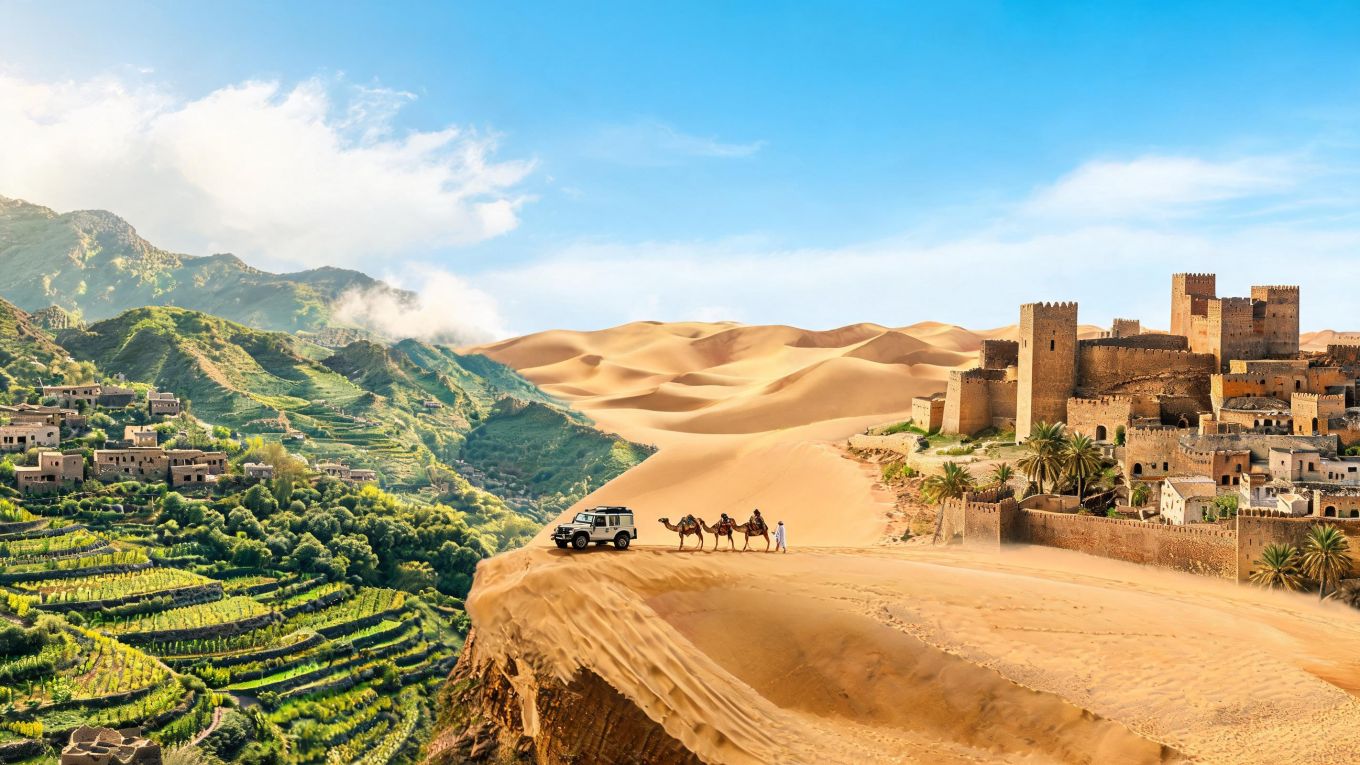
The central region of Oman is renowned for its magnificent natural landscapes and a thousand years of cultural heritage. This route connects three core areas: Jebel Akhdar (Green Mountain), Nizwa, and the Wahiba Sands Desert, offering diverse experiences such as canyon trekking, desert starry nights, and exploring ancient cities. The daily itinerary is well-planned, balancing in-depth exploration with physical exertion, making it ideal for photography enthusiasts, history buffs, and nature adventurers.
Day 1: Nizwa Old City – Echoes of Time from a Thousand-Year-Old Military Fortress
- Nizwa Fort
As one of Oman's most magnificent circular fortresses, Nizwa Fort, built in the 17th century, is famous for its 24-meter-high main tower and labyrinthine defensive passages. Climbing to the top offers a panoramic view of the old city, while the interior displays traditional weapons and a bustling handicraft market, vividly recreating the military and commercial history of Oman's ancient capital. It is recommended to arrive before 9 AM to avoid peak crowds.
- Nizwa Souq (Market)
The sheep market on Friday mornings is the most important traditional market in inland Oman, where locals bring their sheep for trade, filling the air with the scent of frankincense and dates. Within the market, you can purchase handmade copperware, silver jewelry, and saffron. Cash is recommended (some stalls do not accept credit cards).
- Bahla Fort
A UNESCO World Heritage Site, Bahla Fort was the power center of the Banu Nebhan tribe from the 12th to 15th centuries. The fortress features a mud-brick wall structure, with walls stretching 12 kilometers and 132 watchtowers. It is recommended to visit in the evening, when the golden sunset contrasts beautifully with the earthy walls and Falaj irrigation channels, creating excellent photographic opportunities.
Day 2: Jebel Akhdar – A Rose Paradise in the Clouds
- Rose Terraces and Distillery
Every April during the rose season, the valleys of Jebel Akhdar are covered with Damascus roses. Visitors can participate in morning rose picking and experience traditional rose water distillation. Even outside the blooming season, you can still explore pomegranate and almond terraces, taste high-altitude honey, and enjoy almond candy.
- Diana’s Point
A cliffside viewpoint at an altitude of 2000 meters, where you can overlook the sea of clouds, canyons, and the jagged peaks of the Hajar Mountains at sunset. It is recommended to bring a windproof jacket, as temperatures can vary significantly in mountainous areas.
- Al Ain Village Trek
Explore well-preserved traditional villages, visiting mud-brick houses and ancient irrigation systems. The trail is moderately difficult, covering about 3 hours, suitable for family travelers.
Day 3: Wahiba Sands – The Golden Kingdom of the Bedouins
- 4x4 Sand Dune Bashing Experience
Starting from Nizwa, drive through the Hajar Mountains into the Wahiba Sands Desert. Professional drivers will guide you through thrilling sand dune bashing, including steep 45-degree slopes. It is recommended to sit in the front of the vehicle to minimize jolts.
- Bedouin Camp Overnight Stay
Stay in a traditional wool tent, savor saffron tea and grilled lamb, and participate in stargazing. The camp provides telescopes for clear views of the Milky Way and constellations. Nighttime temperatures can drop below 15°C, so warm clothing is essential.
- Sand Dune Photography and Sand Sliding
Capture the changing light on golden sand dunes in the morning, and later in the afternoon, experience sliding down steep dunes on a sandboard. Long pants are recommended to prevent sand friction on your skin.
Day 4: Wadi Shab Canyon – An Adventure Playground in the Oasis
- Canyon Trekking and Swimming
Trek through dry riverbeds surrounded by palm trees, requiring swimming through emerald-green pools to reach hidden cave waterfalls. It is recommended to bring a waterproof bag, hiking shoes, and a life jacket (available for rent at the camp).
- "Skyline" and Jade Pools
In the middle of the canyon, a natural rock fissure forms a "skyline"景观, with sunlight filtering through to illuminate jade-colored pools, making it one of Oman's most iconic photography spots. Be cautious of slippery ground and walk slowly.
Day 5: Sur – A Living Fossil of Ancient Maritime Civilization
- Traditional Dhow Boatyard
Sur is Oman's oldest shipbuilding port, where craftsmen still use traditional techniques to build Dhows. Visitors can observe the boat-building process and learn about the history of Arab maritime civilization.
- Ras Al Jinz Turtle Reserve
One of the world's most important green turtle nesting sites, between May and October, visitors can witness turtles coming ashore to lay eggs at night, and see baby turtles hatching and returning to the sea at dawn. Guided tours must be booked in advance, and flashlights are prohibited.
Route Overview and Tips
Physical Requirements: Moderate. Daily trekking time is approximately 3-5 hours, with some sections in the desert and canyon requiring stamina. Higher altitudes in Jebel Akhdar may require acclimatization.
Time Management: It is recommended to start early in the morning to avoid high temperatures, return to the camp or hotel in the afternoon for rest, and engage in photography or cultural activities in the evening.
How to Find Local Guides/Chartered Vehicles: Through the certified local tour operator platform HeroGuide, you can compare competitive quotes and fixed-price services with just one click. The platform offers Chinese customer service and ensures trip safety, directly connecting users with licensed local guides and vehicles via their website (www.heroguide.com).


