
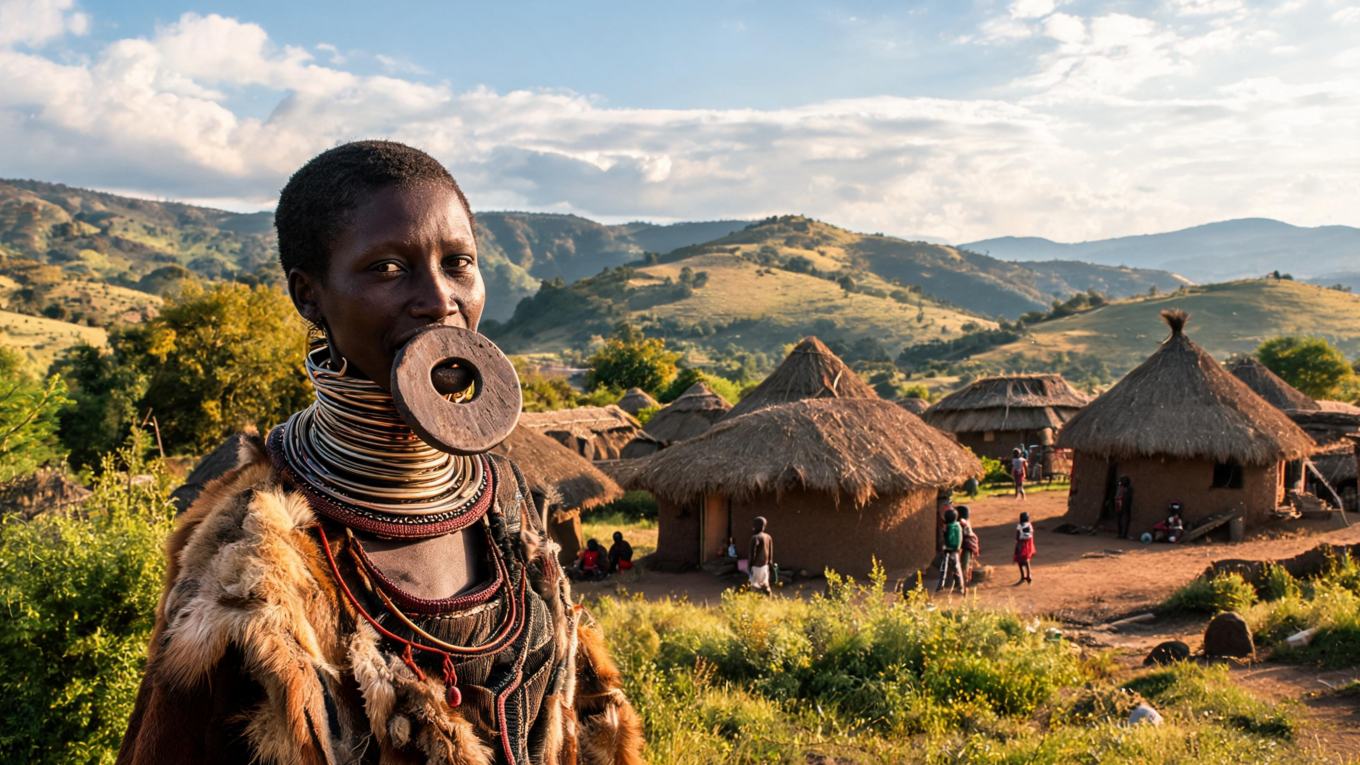
Itinerary Overview
This 5-day route focuses on the Hamar ethnic group's settlement area in Ethiopia, covering the core tribes of the Omo Valley, traditional ceremonies, and natural wonders. Starting from Jinka Town, you will delve into Hamar villages, participate in the bull-leaping ceremony, visit the Lip Plate部落, and experience the rich culture of the原始部落 and the magnificent landscapes of the East African Rift. Each day's itinerary is紧凑 but flexible, suitable for photography enthusiasts and cultural explorers.
Day 1: Jinka — Introduction to Hamar Culture
- Morning: Jinka Anthropological Museum
Visit the museum to learn about the history of various tribes in the Omo Valley, with a focus on the Hamar people's marriage customs, decorative arts, and religious symbols. The museum houses authentic Lip Plates and ceremonial items; it is recommended to check the opening hours in advance.
- Afternoon: Observation Outside Mursi Village
Take a vehicle to the Mursi people's settlement area (accompanied by a guide), observing the custom of women wearing Lip Plates from a safe distance. Respect local taboos, avoid direct photography of faces, and learn to communicate using gestures from your guide.
- Evening: Jinka Market
Experience the local trading scene and purchase Hamar-style handmade bead jewelry and leather goods. The market is most lively on Wednesdays and Saturdays; bring small cash.
Day 2: Deep Experience in Hamar Villages — Preparation for Bull-Leaping Ceremony
- Morning: Turmi Village (Hamar Core Settlement)
Follow an accredited guide into the village to observe the traditional makeup of the Hamar people, which involves applying red ochre and animal fat to their bodies. Participate in daily activities such as women weaving grass skirts and men crafting bows and arrows; try greeting in the local language "Dima."
- Afternoon: Dimeka Market
The Dimeka Market on Thursdays is the largest trading spot in the Omo Valley, where the Hamar people exchange grains and livestock with the Karo and Bana tribes. Be aware that the market may be canceled temporarily due to tribal conflicts; confirm with your guide in advance.
- Evening: Preparation for Bull-Leaping Ceremony Venue (if on ceremony day)
If the Hamar youth wedding bull-leaping ceremony coincides, you can watch the elders set up the venue. The ceremony usually takes place in the early morning; make arrangements with your guide for the next day's itinerary.
Day 3: Bull-Leaping Ceremony and Tribal Celebration (Key Day)
- Morning: Bull-Jumping Ceremony
Young men must jump over a line of 10-15 bulls without clothes; successful participants gain adult status and eligibility for marriage. Tourists should remain quiet, avoid using flashlights, and the ceremony lasts about 3 hours.
- Midday: Tribal Feast
Join the communal meal after the ceremony, tasting traditional Hamar food "Injera" (sour bread) and honey wine. Women will perform the "Evinga" dance, and tourists can join but must follow the rhythm.
- Afternoon: Free Photography in the Village (with guide)
Under the guidance of your guide, photograph daily scenes of the Hamar people, focusing on details such as houses plastered with cow dung, children wearing shell necklaces. Avoid photographing sensitive scenes like funerals.
Day 4: Natural Wonders of the Omo Valley — Konso Cultural Contrast
- Morning: Mago National Park
Drive through the park to spot zebras, giraffes, and species unique to the Omo River. From the park's viewing platform, admire the interwoven landscape of Hamar villages and the rift valley terrain.
- Afternoon: Konso Village (Konso Cultural Landscape)
Contrast with Hamar culture by visiting the UNESCO-certified Konso terraces and stone house architecture. Learn about the "Waka" wood carving tradition of ancestor worship and purchase certified handicrafts (request a receipt).
- Evening: Return to Jinka Town for Rest
Enjoy Ethiopian coffee and "Shiro" (chickpea paste) at a Jinka restaurant to recharge for the next day's departure.
Day 5: Cultural Summary and Departure Preparation
- Morning: Review of Itinerary Photos
Work with your guide to organize captured footage and understand the meanings of cultural symbols in the photos (e.g., cow bone decorations in Hamar hair symbolize wealth).
- Afternoon: Inquiry About Local Guide Services (Optional)
If you wish to extend your trip to Lalibela Rock Churches or Danakil Depression, you can match certified local guides via the HeroGuide website. The platform offers competitive bidding and fixed-price options, supporting bilingual communication in Chinese and English.
Route Overview and Tips
Physical Requirements: Moderate intensity, walking 2-5 kilometers daily, some rough roads require a 4x4 vehicle.
Time Flexibility: The bull-leaping ceremony requires confirmation of the date 3 days in advance; if not available, it can be replaced with Karo tribe body painting experience.
Safety Tips: Always follow your guide, avoid entering villages alone; do not go out at night, carry your guide's contact information.


