
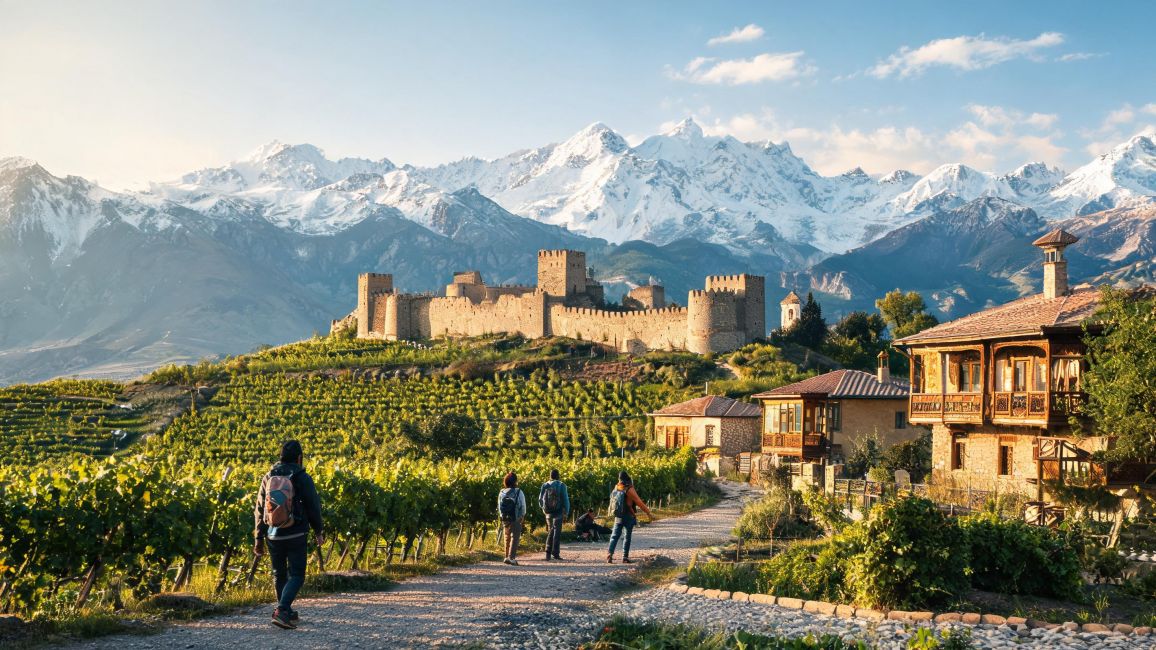
2024 Azerbaijan Karabakh: A Golden Window for Border Opening and Cultural Revival
In 2024, the Karabakh region, located on the border between Azerbaijan and Armenia, is experiencing a historic turning point. With the signing of the Peace Agreement between the two countries and the resumption of cross-border transportation, this once-silent Caucasus haven is now opening its doors to global travelers in a new light. From ancient monasteries to stunning canyons, from traditional craft villages to border markets, Karabakh's "non-traditional" travel experience is emerging as a黑马 (dark horse) among Asia's niche destinations. This article will analyze why 2024 is the best time to explore Karabakh by combining the latest policies, cultural events, and travel conveniences.
Policy and Transportation: Breaking Through the "Last Mile" After Border Opening
In March 2024, the Azerbaijani government officially announced the opening of tourism visa applications for the Karabakh region (including key towns such as Shusha and Hankendi). It also introduced the "Caucasus Peace Pass," which allows tourists holding an Azerbaijani e-visa to enter Karabakh through designated land crossings (such as the Lachin Corridor), with a maximum stay of 7 days. This policy has broken the previous restriction of only allowing group tours, enabling independent travelers to book border guides through local agents or certified platforms for in-depth, free-form exploration.
Regarding transportation, direct bus services from Baku to the capital of Karabakh, Shusha, were launched in May 2024, operating once daily, with a journey time of about 6 hours and a fare of approximately $25 (including assistance with border clearance). For those seeking flexibility, it is recommended to use the HeroGuide certified local agent matching platform to book private car services for up to four people. The competitive bidding model can save 30% on costs, while all-inclusive packages include border crossing permits, guides, and basic insurance, making them ideal for families or small groups.
Festivals and Experiences: Immersive Culture from Religious Ceremonies to Border Markets
The value of traveling to Karabakh lies not only in its natural landscapes but also in its unique blend of Armenian and Azerbaijani cultures. Key events in 2024 include:
- Shusha International Music Festival (August): Held at the site of an 18th-century fortress, this festival features performances of traditional Caucasian instruments alongside modern electronic music, with tickets including guided tours of the ancient city.
- Ganzasar Monastery Easter Celebration (April): An important religious ceremony of the Armenian Apostolic Church, offering insights into the coexistence of religions in the border region. Special access must be arranged in advance through a local agent.
- Lachin Border Market (Every Wednesday and Saturday): A cross-border trading hub jointly operated by Azerbaijani and Armenian vendors, where visitors can purchase handmade carpets, copperware, and specialty dried fruits. It is recommended to carry small amounts of cash (Azerbaijani Manat or US dollars).
New Attractions and Facilities: Dual Upgrades in Safety and Experience
To attract more tourists, Karabakh has introduced several new infrastructure developments in 2024:
- "Peace Trail" Hiking Route: A 30-kilometer trail connecting Shusha and Hankendi, featuring scenic viewpoints and rest stops along the way. The route is equipped with bilingual signage (Azerbaijani/English), making it suitable for half-day light hiking.
- Dash Altyn Thermal Spa Resort: Utilizing local geothermal resources, this resort offers sulfur baths and traditional Caucasian massages. Room rates, including breakfast, are approximately $80 per night, and reservations must be made at least 30 days in advance via the HeroGuide platform.
- Drone Flight Restrictions Adjustments: Outside a 5-kilometer radius around military facilities, most areas of Karabakh have lifted drone flight bans. Photography enthusiasts can apply for permission to capture panoramic views of canyons and ancient cities (permit fee approximately $15 per day).
Target Audience and Best Time to Visit
Karabakh is ideal for travelers seeking "off-the-beaten-path" deep experiences, particularly history buffs, cultural researchers, and photography enthusiasts. The best times to visit are May-June (spring wildflowers in bloom) or September-October (clear autumn weather), avoiding the high temperatures and rainy season of July-August. Important notes include:
- Border areas have weak signal coverage, so it is recommended to download offline maps (such as Maps.me) and carry paper maps.
- Some sites (e.g., Ganzasar Monastery) require modest attire (covering shoulders and knees) to respect local religious customs.
- Medical resources are limited, so it is advisable to purchase travel insurance that includes emergency medical evacuation.
Further Reading and Useful Links
- Azerbaijan National Tourism Agency Website: For the latest visa policies and information on open attractions.
- HeroGuide Platform: To search for certified local agent quotes, book border guides, and private car services.
- Caucasus Peace Pass Application Portal: Applications must be submitted at least 15 working days in advance.