
Pre-Travel Checklist: From Documents to Essentials
Addis Ababa, as the capital of Ethiopia, serves as the gateway to exploring East Africa. Before your trip, focus on the following preparations:
- Vaccines and Health: Yellow fever vaccination is mandatory for entry (recommended to get it 10 days in advance), malaria medication and gastrointestinal medicine are suggested to carry; the local water quality is poor, so bottled water is recommended.
- Climate and Clothing: The average annual temperature is 15-20°C with significant temperature differences between day and night, so thin outerwear is needed; religious sites (such as Holy Trinity Cathedral) require covering shoulders and knees, so light long pants/scarves are recommended.
- Language Tools: The official language is Amharic, and English is widely spoken, but communication may be difficult in markets and public transport, so downloading an offline translation app (like Google Translate) is suggested.
Visas and Documents: E-visa vs Visa on Arrival
Chinese citizens can apply for an e-visa or visa on arrival, but the visa on arrival has long queues and risks of being asked for "tips," so it is recommended to apply for an e-visa in advance:
- E-visa Process: Apply through the Ethiopian Immigration Bureau's official website, requiring a passport scan, photo, and itinerary, costing $52 (single entry), with a processing time of 3 business days.
- Visa on Arrival Requirements: Prepare your passport, return flight ticket, hotel reservation (can be vague), and 2 photos, costing $50, but you might actually be asked to pay more.
- Important Reminder: Your passport must be valid for more than 6 months, and it is recommended to make copies of the passport page and visa page to carry with you.
Currency and Payment: Ethiopian Birr vs USD
The local currency is the Ethiopian Birr (ETB), with 1 USD ≈ 55 ETB (exchange rates fluctuate, so use the bank rate on the day of exchange):
- Cash King: Credit card usage is low, only some high-end restaurants and hotels accept Visa/Mastercard, so bring enough US dollars in cash (new bills only, old bills may be refused).
- Exchange Tips: Airport exchange rates are poor, recommend exchanging at正规换汇点 in the city center commercial area (like Bole Road); black market rates are higher but risky, not recommended.
- Tipping Habits: Tipping is not mandatory in restaurants, but for drivers and guides, it is suggested to give 50-100 ETB daily (about 1-2 USD).
Communication and Internet: How to Stay Online
Addis Ababa has good network coverage, but the speed is slow, so the following options are recommended:
- Local SIM Card: You can buy an Ethio Telecom card (recommend "Tourist Package") at the airport or city convenience stores, costing about 300 ETB (about 5 USD) for 1GB of data, requiring passport registration.
- International Roaming: Chinese carriers (like China Mobile) support roaming in Ethiopia, but the cost is high (about 30 CNY/day), only recommended for short-term emergency use.
- Wi-Fi Hotspots: High-end hotels and cafes (like Tomoca Coffee) provide free Wi-Fi, but ensure safety before connecting.
Local Transportation Practice: Buses, Taxis, and Private Tours
Addis Ababa's transportation is complex, beginners easily get lost, so the following methods are recommended:
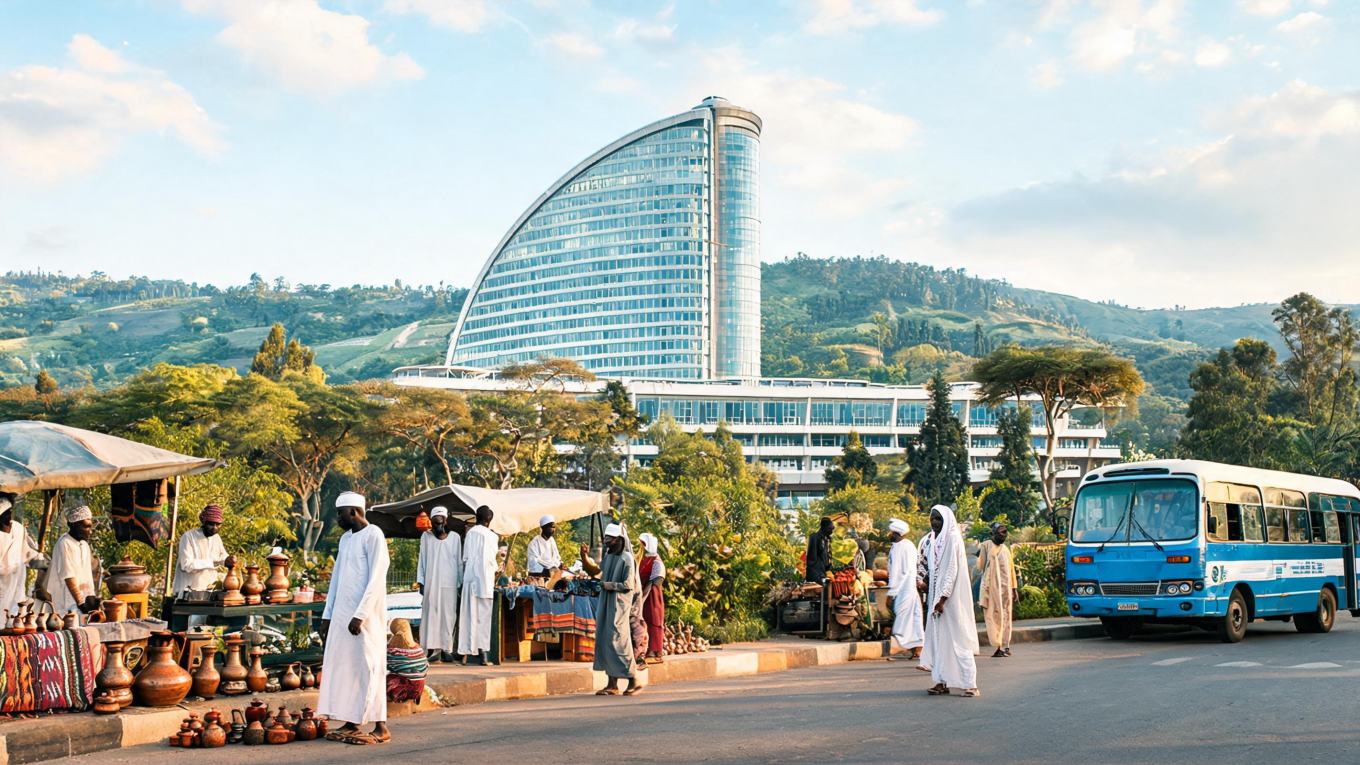
- Blue Minibus: The cheapest local transport (2-5 ETB per ride), but no fixed stops, need to communicate destinations in Amharic, it is suggested to observe where locals board and alight.
- Taxi Apps: Ride (local app) or Bolt (international app) can be used, but drivers may refuse short rides or ask for extra charges, so confirm prices in advance.
- Private Tours and Guides: If you want to explore places like the National Museum and Merkato Market deeply, it is recommended to book local guides or private tours through certified local tour platforms地接侠(HeroGuide), supporting competitive bidding and fixed-price models to avoid being overcharged.
Safety and Etiquette: Respect Culture, Avoid Conflicts
Ethiopians are hospitable but conservative, pay attention to the following details:
- Religious Etiquette: Remove shoes when entering churches, women need to cover their hair with a headscarf; permission is required to photograph locals, especially elders and children.
- Safety Tips: Avoid traveling alone at night, especially outside the Bole area; wallets and phones should be placed in front pockets, and backpacks should be kept under constant watch.
- Dietary Restrictions: Pork is not sold in Muslim areas, and some restaurants do not serve alcohol; the left hand is considered impure, so use the right hand for passing items or eating.
Common Mistakes for Beginners: Don't Fall into These Traps
- Misleading "Low-Cost Tours": Street hawkers' "one-day tours" may lead you to designated shops for consumption, it is recommended to filter transparent-priced guides through地接侠(HeroGuide).
- Ignoring Time Zone Differences: Ethiopia uses Eastern Time Zone (UTC+3), which is 5 hours behind Beijing Time, so adjust your schedule in advance.
- Unrestricted Photography of Police/Military: May be asked to delete photos or face fines, confirm if photography is allowed before taking pictures.


