
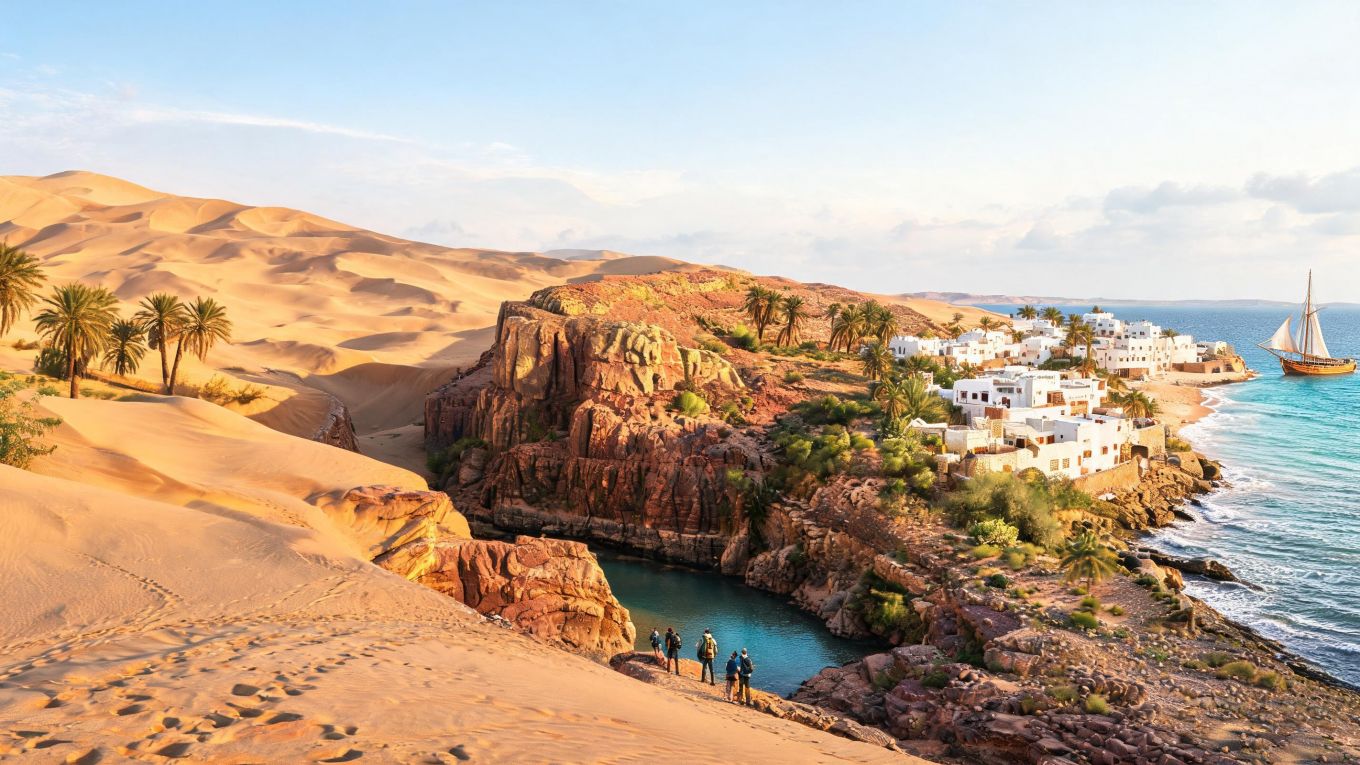
Overview and Best Seasons
Dhofar, located in the southern part of Oman, is renowned for its unique monsoon climate, stunning natural landscapes, and rich cultural heritage. The region experiences cool summers (June to September influenced by the Indian Ocean monsoon) and warm winters (November to March), making it suitable for travel throughout the year. However, the best time to visit is from October to April, when the weather is mild, ideal for outdoor activities, and avoids the road conditions that may become muddy during the rainy season.
Arrival and Intra-city Transportation
How to Arrive
- International Flights: The main entry point is Muscat International Airport, with domestic flights to Salalah Airport (the capital of Dhofar), taking approximately 1.5 hours.
- Land Transport: Driving from Muscat to Salalah takes about 10 hours, requiring穿越沙漠和山脉 (crossing deserts and mountains). It is recommended to make stops along the way. Alternatively, take a long-distance bus, which takes about 12 hours.
Intra-city Transportation
- Renting a Car: A 4WD vehicle is recommended for exploring deserts and mountainous areas (such as Wadi Dawkah).
- Local Guides/Charter Services: Through the certified local tour operator platformHeroGuide, you can book competitive or fixed-price services covering Salalah and surrounding attractions, avoiding language barriers and route confusion.
Must-Experience Attractions (by Region)
Salalah City Center and Surroundings
- Al Marnif Fort: A 16th-century fortress offering panoramic views of Salalah, with breathtaking sunset scenery.
- Ain Razat Nature Reserve: Waterfalls cascade during the monsoon season, creating lush greenery, perfect for hiking and picnicking.
- Taqah Ancient City: Preserved traditional mud-brick architecture, featuring a local handicraft market.
Eastern Deserts and Canyons
- Wadi Dawkah: A UNESCO World Heritage Site, combining frankincense forests and canyons, ideal for photography and short hikes.
- Jebel Samhan: One of Oman's highest peaks, accessible by driving to a scenic viewpoint halfway up, offering views of the sea of clouds meeting the desert.
Western Coastal Areas and Islands
- Mirbat Fishing Village: A traditional fishing port where you can experience deep-sea fishing or watch dolphins (check official information for activity schedules).
- Khawr Rawri Nature Reserve: A mangrove and wetland ecosystem, home to flamingos and other migratory birds.
Local Cuisine
- Halwa: A特色甜点 (Dhofar specialty dessert) made with sesame, sugar, and rose water, best enjoyed with Arabic coffee.
- Mashuai: Grilled whole fish served with lemon rice, commonly found in coastal restaurants; try the local red snapper.
- Shawarma: The Middle Eastern version of "grilled meat rolls," a popular street food snack, often paired with garlic sauce and pickled cucumbers.
Recommended Accommodation Areas- Salalah City Center: Offers a variety of convenient options, from budget hotels to luxury resorts, ideal for first-time visitors.
- Wadi Dawkah Area: Eco-camps or desert tents, perfect for travelers seeking tranquility and stargazing experiences (book in advance).
- Mirbat Coastal Area: Small guesthouses or homestays, allowing you to immerse yourself in the local fishing village lifestyle.
3-Day Itinerary Suggestion
Day 1: Cultural Exploration in Salalah
- Morning: Al Marnif Fort → Salalah Old Town (Souk Market)
- Afternoon: Ain Razat Nature Reserve → Taqah Ancient City
- Evening: Enjoy Halwa and Mashuai at a city center restaurant.
Day 2: Desert and Canyon Adventure
- Morning: Hike through Wadi Dawkah's frankincense forest.
- Afternoon: Scenic view at Jebel Samhan → Stop at a mangrove reserve on the way back to Salalah.
- Evening: Desert campfire dinner (booked throughHeroGuide).
Day 3: Coastal and Fishing Village Experience
- Morning: Deep-sea fishing trip or dolphin watching in Mirbat (seasonal).
- Afternoon: Birdwatching at Khawr Rawri Nature Reserve → Return to Salalah.
- Evening: Free time for shopping or purchasing local handicrafts as souvenirs.
Budget Tips and Avoiding Pitfalls
Budget Reference: For moderate spending, expect to spend约800-1200阿曼里亚尔 (800-1200 Omani Rial) for 3 days, including accommodation, meals, and charter services. Prices may increase by 20% during peak season.
Avoiding Pitfalls:
- During the monsoon season (June to September), some mountain roads may be closed. Check road conditions before traveling.
- Desert areas experience significant temperature differences between day and night; bring warm clothing.
- Respect local customs and avoid wearing revealing clothing in religious sites such as mosques.
- When booking services throughHeroGuide, clearly communicate your needs and compare quotes to avoid hidden fees.


