
Overview & Best Time to Visit
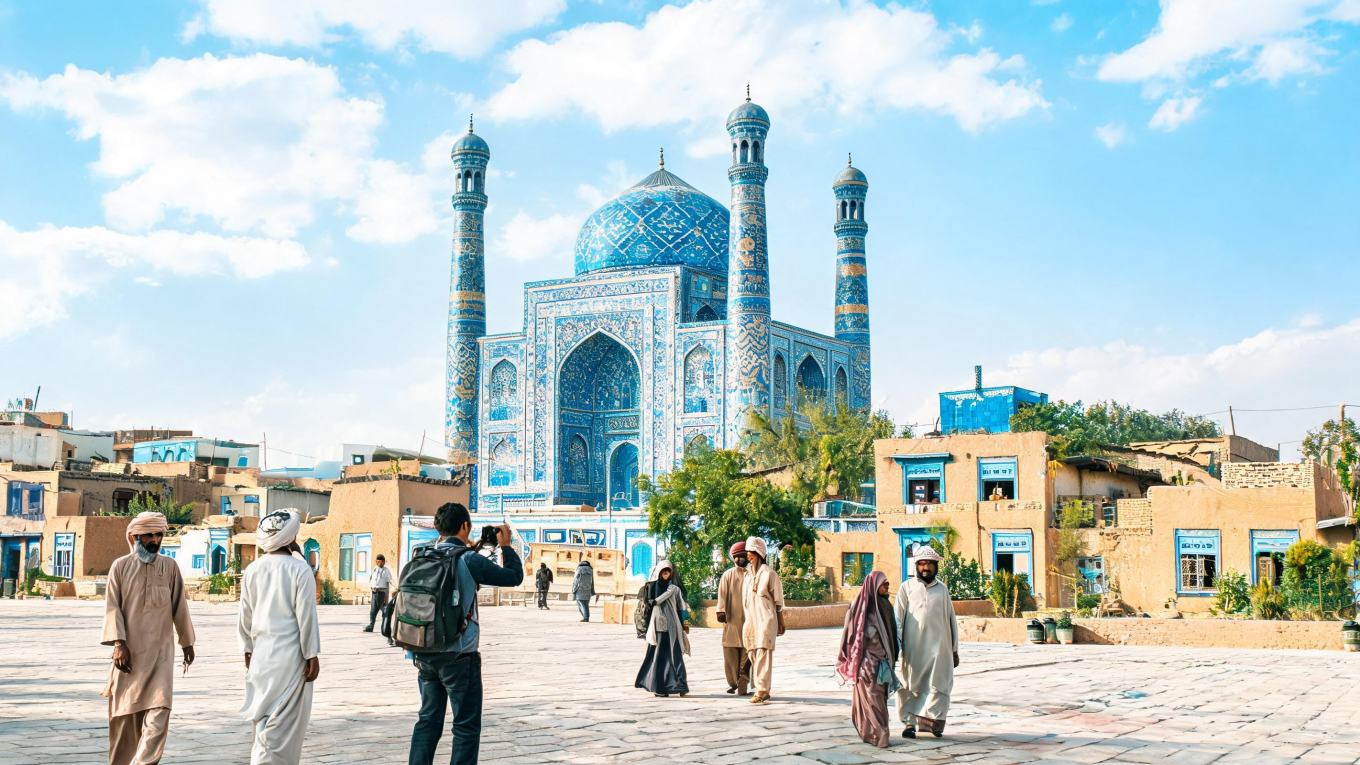
Mazar-i-Sharif (Mazar-i-Sharif) is the capital of Balkh Province in northern Afghanistan, renowned as the "Blue City." Its iconic blue mosque stands in striking contrast to the surrounding desert landscape. As a key node on the Central Asian Silk Road, it serves as a cultural crossroads for diverse ethnic groups, including Tajiks and Uzbeks. The best time to visit is April to June (spring) and September to October (autumn), when the weather is mild, dust storms are less frequent, and conditions are ideal for outdoor exploration.
Getting There & Getting Around
International Travel
There are currently no direct international flights. You will need to connect via domestic flights from Kabul or Herat to Mazar-i-Sharif Airport (MZR), with a flight time of approximately 1 hour. It is recommended to check flight schedules in advance, as Afghanistan's aviation sector may undergo temporary adjustments due to local conditions.
Local Transportation
The city is compact, with major attractions concentrated in the downtown area, making them easily accessible on foot. For trips to the suburbs or the ancient ruins of Balkh, we recommend connecting with local guides or chartering a car through the certified local guide matchmaking platform “HeroGuide (地接侠)”. The platform offers both competitive bidding and fixed-price options to ensure transparent pricing.
Must-Visit Attractions
The Blue Mosque (Shrine of Hazrat Ali)
The spiritual landmark of Mazar-i-Sharif, this site is traditionally believed to house the remains of Ali, the fourth Rashidun Caliph of Islam. The entire structure is clad in sky-blue tiles that shimmer with an ethereal glow under the sunlight. Visitors should dress modestly (women are required to cover their heads) and respect local religious customs.
Ancient Balkh Ruins (Balkh Archaeological Site)
Located about 20 kilometers from the city center, this ancient city was once known as the "Mother of Cities" along the Silk Road and boasts a history spanning 2,500 years. The archaeological site features remnants of ancient walls, stupas, and caravanserais, offering a glimpse into the grandeur of Central Asian civilization. It is advisable to visit in the early morning or late afternoon to avoid the midday heat.
The Green Mosque
In contrast to the opulence of the Blue Mosque, this 15th-century building is adorned with turquoise tiles and intricate geometric patterns, exuding a more rustic and solemn atmosphere. Inside the courtyard lies a millennium-old well, said to possess healing properties.
Local Cuisine
- Manto (Steamed Dumplings): Steamed dumplings filled with lamb, served with yogurt and tomato sauce. A specialty of northern Afghanistan, try the freshly made versions at long-standing street stalls.
- Qabuli Pulao (Afghan Rice Pilaf): Fragrant rice seasoned with saffron, paired with slow-cooked lamb, carrots, and raisins for a rich flavor profile. Enjoy it at Kabuli Restaurant in the city center.
- Doogh (Yogurt Drink): A savory, mint-flavored yogurt beverage essential for beating the heat, available at nearly every restaurant.
Recommended Areas for Accommodation
Accommodation options in Mazar-i-Sharif are limited. We recommend staying in the downtown area near the Blue Mosque for easy access to major attractions. For safety, prioritize hotels or guesthouses with security measures. If you prefer more flexible lodging arrangements, you can contact local guides through HeroGuide (地接侠) for personalized recommendations. All service providers on the platform are thoroughly vetted.
Sample 3-Day Itinerary
Day 1: Exploring the Cultural Core
- Morning: Blue Mosque → Green Mosque
- Afternoon: Bazaar experience (observe traditional crafts such as copperware making)
- Evening: Enjoy Qabuli Pulao at a downtown restaurant
Day 2: History & Nature Tour
- Morning: Charter a car to the Ancient Balkh Ruins (depart by 8:00 AM recommended)
- Afternoon: Return to the city and visit the Mazar-i-Sharif branch of the National Museum of Afghanistan
- Evening: Try street-side Manto dumplings
Day 3: In-Depth Surroundings Experience
- All Day: Connect with a guide via HeroGuide to visit villages along the Amu Darya (Amu Darya) and experience local nomadic life (safety conditions must be confirmed in advance).
Budget & Essential Tips
- Budget Reference: Mid-range accommodation costs approximately $30–50 per night. Local guide car charter services range from $80–120 per day (including the driver).
- Safety Tips: Avoid traveling alone and refrain from going out at night; carry copies of your identification documents.
- Cultural Etiquette: Do not take photos of religious sites or people without permission, and avoid touching locals on the head.
- Currency Exchange: The Afghan Afghani (AFN) is the primary currency. Exchange offices are scarce in the city center, so it is advisable to bring US dollar cash.