
Itinerary Overview
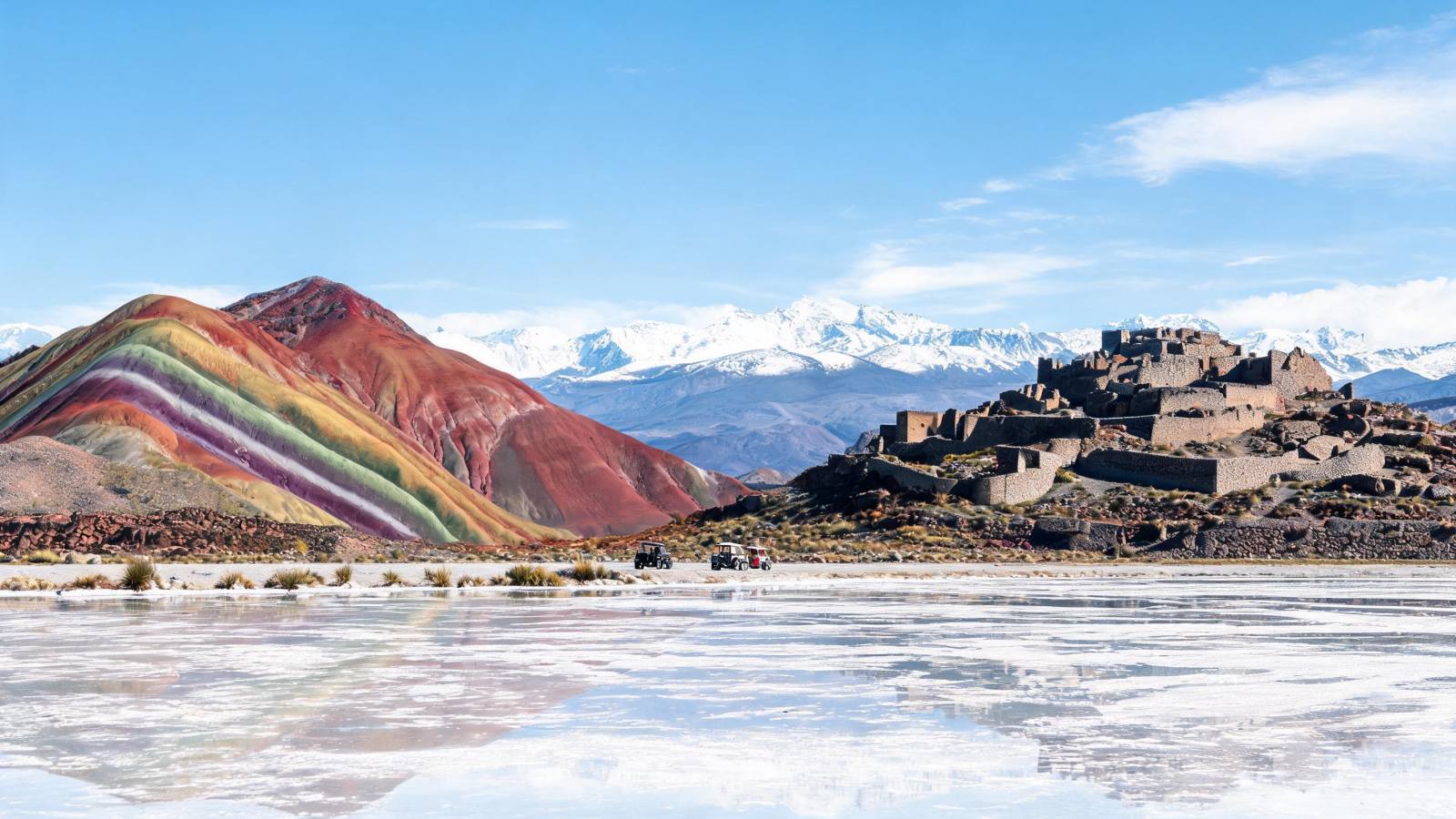
Jujuy Province in northwestern Argentina is renowned for its colorful hills, millennia-old salt flats, and Inca ruins, making it a paradise for off-the-beaten-path travelers in South America. This route combines natural wonders and cultural landmarks near the Salta border, featuring a tight daily schedule that still leaves ample time for photography. It’s ideal for photography enthusiasts and cultural explorers.
Day 1: Cultural Introduction to Jujuy City
- Seven Color Hill (Cerro de los Siete Colores)
Route: Within walking distance from the city center
Highlights: Built in the 16th century, this colonial-style church features stunning stained glass windows and a golden altar. Visit early in the morning to avoid crowds and photograph architectural details. - Government Palace (Palacio de Gobierno)
Route: 5-minute walk from the cathedral
Highlights: Features pink walls adorned with murals depicting the Andes Mountains. Free guided tours are available Wednesday through Sunday from 10:00-18:00, offering insights into Jujuy’s history of independence. - Indigenous Artisans Market (Mercado de Artesanías Indígenas)
Route: 10-minute walk from the Government Palace
Highlights: A hub for local artisans. Recommended purchases include wool textiles and painted pottery. Bargaining typically ranges from 30% to 50%. Note that vendors may close up early after 6:00 PM.
Day 2: Seven Color Hill and Humahuaca Hills
- Seven Color Hill (Cerro de los Siete Colores)
Route: Drive or join a local day tour (approx. 2 hours)
Highlights: A geological wonder featuring seven-colored rock layers formed by minerals like iron, copper, and magnesium. Bring a polarizing filter to reduce glare. The light is softest at sunrise, so arrive 1 hour early to secure a good spot. - Humahuaca Hill (Cerro Humahuaca)
Route: 30-minute drive from Seven Color Hill
Highlights: An Inca-era observatory at the summit offers panoramic views of Humahuaca town. The hiking trail is about 1.5 km long; wear non-slip shoes. Some sections become muddy during the rainy season (November–March). - Independence Monument (Monumento a la Independencia)
Route: Walk from the center of Humahuaca town
Highlights: A 20-meter-tall white sculpture group symbolizing Argentina’s War of Independence. Ideal for silhouette photography when evening lights turn on. Nearby cafés serve local mate tea paired with medialunas (crescent-shaped pastries).
Day 3: Salinas Grandes Salt Flat and Tilcara
- Salinas Grandes Salt Flat (Salinas Grandes)
Route: 3.5-hour drive from Jujuy or join a cross-province tour (includes Tilcara)
Highlights: A vast white salt plain stretching to the horizon at an altitude of 4,200 meters. Wear waterproof boots to prevent cuts from sharp salt crusts. You can try salt block carving workshops (approx. $5 USD). Be mindful of altitude sickness and avoid strenuous activity. - Tilcara Archaeological Site (Pucará de Tilcara)
Route: 1-hour drive from the salt flat
Highlights: A pre-Inca fortress ruin dating back to the 12th century. Remnants of walls and an astronomical observatory showcase ancient engineering ingenuity. Closed every Tuesday for maintenance. Admission is $8 USD, which includes an audio guide. - Tilcara Town (Villa de Tilcara)
Route: 10-minute walk from the archaeological site
Highlights: A blend of traditional Andean architecture and modern art galleries. Highly recommended: dine at La Casa de Ema restaurant for charcoal-grilled llama (llama meat) served with Andean corn tortillas. Average cost per person: $15–$20 USD.
Day 4: Los Cardones National Park and Cerro de la Polvarilla
- Los Cardones National Park (Parque Nacional Los Cardones)
Route: 2-hour drive from Jujuy
Highlights: Named after its giant cardón cactus groves. Hiking the La Cuesta trail (3 km round trip) is highly recommended, where you can spot Andean condors circling overhead. Simple maps are available for purchase at the park entrance. - Cerro de la Polvarilla (Cerro de la Polvarilla)
Route: 1.5-hour drive from the national park to Tres Cruces
Highlights: A railway viaduct soaring at 4,475 meters above sea level. We recommend experiencing the “Cloud Train” (Tren a las Nubes) (book tickets online at least 30 days in advance). Self-drivers can visit the viewpoint to capture photos of the bridge against snow-capped mountains.
Day 5: Quebrada de Humahuaca and Maimará
- Quebrada de Humahuaca (Quebrada de Humahuaca)
Route: 1-hour drive from Jujuy
Highlights: A UNESCO World Heritage Site. Focus your photography on the red rock formations of Cerro Tamborero and the cliffside Santuario de la Virgen de la Peña chapel. A wide-angle lens is recommended to capture the canyon’s depth. - Maimará Village (Maimará)
Route: 20-minute drive from the canyon
Highlights: Famous for its “painter’s palette” farmlands. Colors are most vibrant during the planting season (September–October) and harvest season (March–April). Visit local family workshops to learn traditional weaving techniques (advance reservation required).
Route Overview & Tips
Physical Demand: Moderate intensity. Daily hiking distances range from 2 to 5 km. Acclimatize to high altitudes at the salt flat and Cerro de la Polvarilla (carrying oxygen bottles is recommended).
Time Management: For cross-province attractions (e.g., Salinas Grandes, Tilcara), joining a local tour is advised. Self-drivers should allow extra time for winding mountain roads.
Seasonal Advice: April to October is the best time to visit. The rainy season (November–March) may affect accessibility on some mountain routes.