
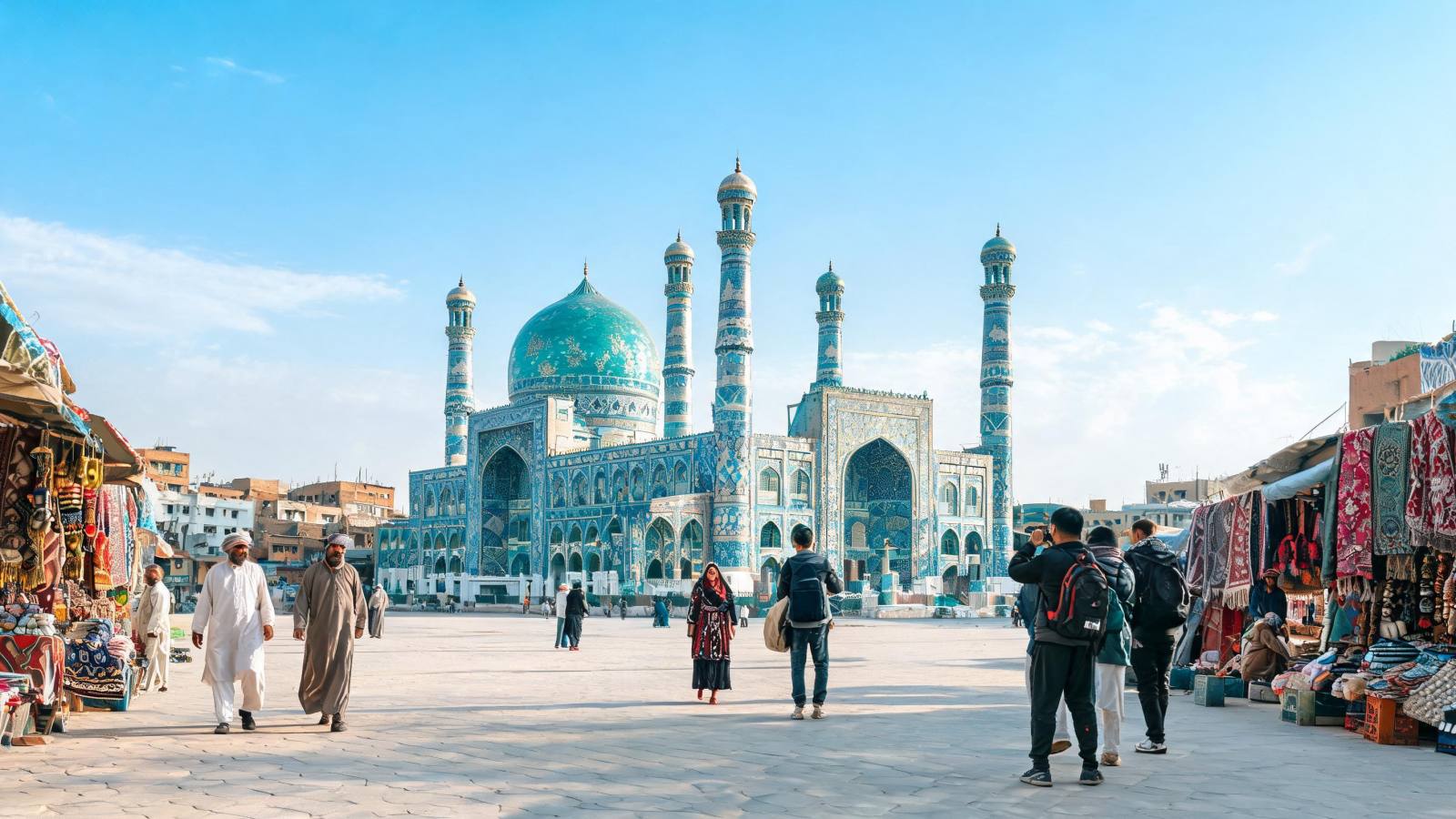
Core Highlights: A Millennium-Old City Reborn Amid Improved Safety Conditions
As a transportation hub and cultural heart of northern Afghanistan, Mazar-i-Sharif is undergoing a historic transformation. Following the 6.4-magnitude earthquake in November 2025, local authorities partnered with international organizations to complete the restoration of the Blue Mosque. The first section of the Kushk-e-Pahna Canal began flowing in 2026, unlocking eco-tourism opportunities, while the revival of traditional festivals like Nowruz further enhances its appeal. Once underestimated due to security concerns, this ancient city is now reshaping its tourism image through a dual focus on "culture + ecology."
Background & Changes: Three Key Drivers Reshaping the Tourism Landscape
1. Continuous Improvement in Security Conditions
According to an announcement by the Afghan Interim Government's Ministry of Tourism in June 2026, Balkh Province, where Mazar-i-Sharif is located, has gone 18 consecutive months without major security incidents. Local police have established three new tourist police precincts, focusing on key attractions such as the Blue Mosque and the ancient city of Balkh, alongside a 24-hour multilingual emergency hotline. In July 2026, the Chinese Embassy in Afghanistan updated its travel advisory, downgrading the city's risk level from "Exercise High Caution" to "Exercise Increased Caution."
2. Upgraded Infrastructure
- Transport Network: Mazar-i-Sharif International Airport completed runway expansion in March 2026, enabling operations for medium-sized aircraft like the Airbus A320. Uzbekistan Airways has added two weekly direct flights between Tashkent and Mazar-i-Sharif.
- Heritage Restoration: The UNESCO-funded restoration of the Blue Mosque was completed in May 2026. Traditional craftsmanship was used to reconstruct the 12th-century blue tile dome, complemented by new nighttime light shows and an AR guided tour system.
- Eco-Engineering Initiatives: The first 50-kilometer stretch of the Kushk-e-Pahna Canal began flowing in April 2026. Three birdwatching platforms and two cycling greenways have been built along its banks, prompting the UN Environment Programme to designate it as a "Silk Road Ecological Restoration Demonstration Project."
3. Systematized Festival Programming
During the 2026 Nowruz festival (March 21–24), the region hosted its inaugural "Silk Road Cultural Week," featuring 12 events including an international Buzkashi tournament, a live historical performance at the ancient city of Balkh, and a Central Asian handicrafts expo. According to the Balkh Provincial Tourism Department, visitor numbers reached 23,000 during the holiday period, with foreign tourists accounting for 15%—a 300% increase compared to 2024.
Practical Impact for Travelers: Five Major Experience Upgrades
1. Lower Barriers to In-Depth Cultural Tours
Following its restoration, the Blue Mosque now offers evening visits (19:00–21:00), allowing visitors to experience 12th-century pilgrimage scenes via AR devices. The ancient city of Balkh has introduced French and Chinese audio guides, highlighting layered archaeological sites that include Greek-style colonnades, Buddhist Gandharan sculptures, and Islamic mosque ruins.
2. Innovative Eco-Tourism Products
A new one-day "Canal Cycling + Wetland Birdwatching" route has been developed along the Kushk-e-Pahna Canal, complete with professional guides and security escorts. Ecological monitoring data records 217 bird species in the area, including endangered Dalmatian pelicans and white-tailed eagles.
3. Enhanced Festival Participation
During Nowruz, travelers can register for traditional "Spring Equinox Rituals," which include planting apricot trees beneath ancient city walls, joining Hazara community dances, and tasting Nowruz porridge cooked with fresh canal water. The activity fee includes insurance and basic gear, costing approximately $15 per person.
4. Streamlined Visa & Border Clearance
Since January 2026, the Afghan Interim Government has implemented "e-Visas for Tourism." Chinese citizens can apply online for a 30-day single-entry visa ($80), with processing times reduced to three business days. Mazar-i-Sharif Airport has added a dedicated "Tourist Lane," offering expedited clearance for e-visa holders.
5. Comprehensive Security Support
Local travel agencies now offer a "Security Package" service, including 24-hour escort accompaniment, satellite tracker rental, and emergency medical evacuation insurance, at approximately $50 per day. Chinese travelers are encouraged to prioritize security firms partnered with Chinese enterprises, with services available in Chinese, Pashto, and Dari.
Target Audience & Best Time to Visit
Primary Audience
- Cultural Heritage Enthusiasts: The ancient city of Balkh is the world's only surviving site showcasing the layered convergence of Greek, Buddhist, and Islamic civilizations.
- Eco-Travelers: The Kushk-e-Pahna Canal wetlands serve as a crucial migratory stopover for birds in Central Asia.
- Festival Experiencers: Nowruz blends traditions from multiple Central Asian ethnic groups, making it ideal for families and photography enthusiasts.
Recommended Timing
The optimal travel window is September to November 2026, when temperatures are pleasant (15–25°C), canal water levels are stable, and visitors avoid spring dust storms and winter cold. For festival experiences, plan your trip around the March Nowruz or October Eid al-Adha celebrations.
Practical Information & Further Reading
- Official Resources: The Afghan Ministry of Tourism website (www.tourism.gov.af) offers a Chinese-language safety guide and an attraction booking system.
- Transportation Tips: Travel from Kabul to Mazar-i-Sharif via domestic flight (approx. 1 hour) or private charter/car hire (approx. 6 hours; 4WD vehicles recommended).
- Further Reading: China's Position on the Afghanistan Issue (Official website of the Chinese Embassy in Azerbaijan)