
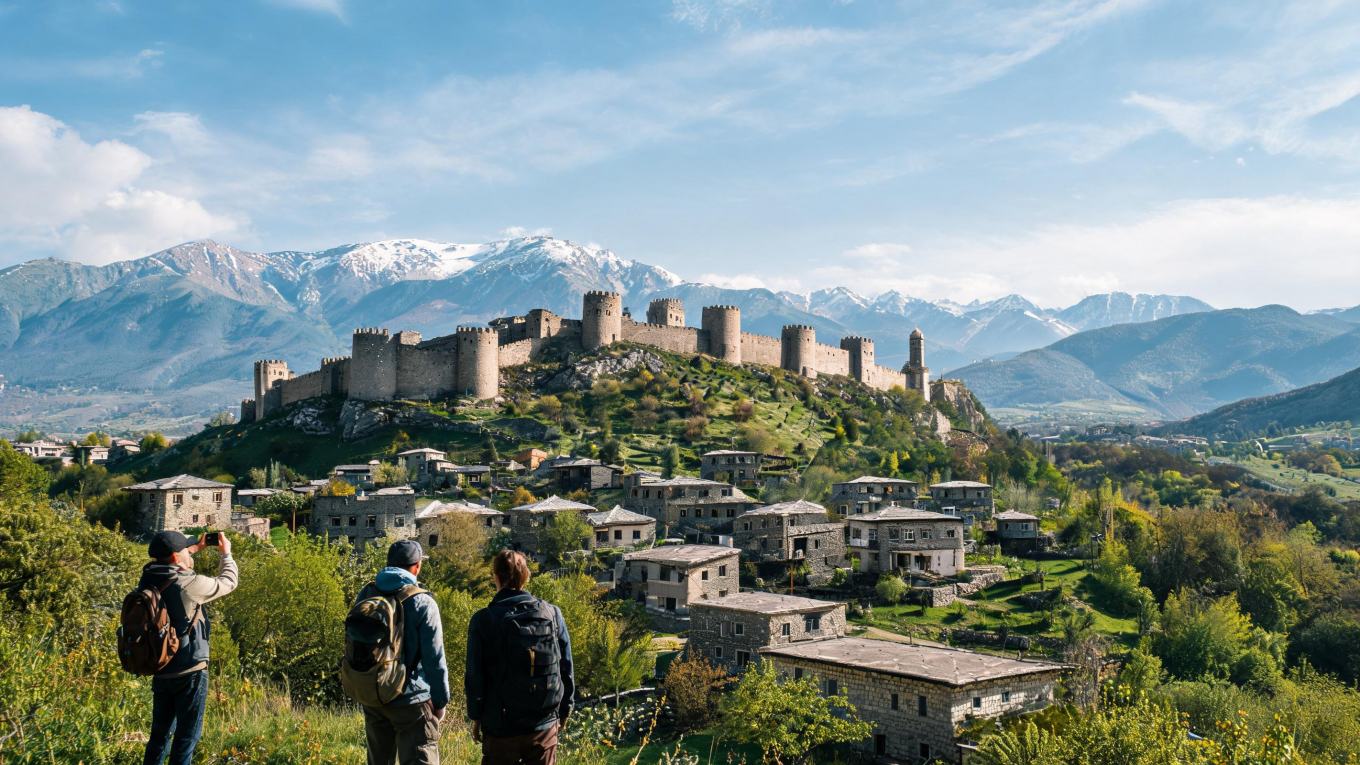
Key Highlights: Dual Support from Post-War Restoration and Policy Benefits
In 2026, the Kalbajar region of Azerbaijan (including cities such as Shusha and Lachin) is attracting global travelers with a dual focus on "cultural heritage restoration + policy openness." This area is not only an important node along the ancient Silk Road but has also become a benchmark for cultural revival in the Caucasus due to the launch of the "Shusha Cultural Revival Project" in 2023. Seventeen historical buildings have been restored, the Silk Road Museum displays over 300 artifacts, and AR technology brings千年古墙 to life. Meanwhile, the visa-free policy between China and Azerbaijan (allowing single-entry stays of up to 30 days) and the simplification of self-driving permits in the Karabakh region have made it unprecedentedly convenient to explore this hidden paradise.
Policy and Openness: Visa-Free + Self-Driving, Travel Barriers Significantly Reduced
1. Visa-Free Agreement Between China and Azerbaijan: Convenience for Spontaneous Trips
Since July 16, 2025, Chinese citizens holding ordinary passports can enter Azerbaijan visa-free, with a single stay not exceeding 30 days and a cumulative stay of no more than 90 days within 180 days. This policy directly contributed to a 57% increase in Chinese tourists visiting Azerbaijan in the first half of 2026. As a new destination, the Karabakh region is leveraging platforms like HeroGuide to offer transparent package car services for Chinese tourists, including competitive bidding and fixed-price options, solving language and transportation challenges.
2. Karabakh Self-Driving Permit: Making a 5-Day Deep Exploration Possible
Starting from July 23, 2025, foreign tourists can apply for a self-driving permit (valid for 5 days) via the "Yolumuz Qarabağa" website or mobile app, covering key cities such as Shusha, Lachin, and Hanekend. It is recommended to apply online at least three working days in advance and confirm that vehicle insurance covers the Karabakh region. The official guide to applying for a permit shows that over 2.54 million visitors came to the region in 2025. The booking rate for homestays in Shusha has exceeded 95% for five consecutive months, so early planning is essential during peak season.
New Attractions and Experiences: A Collision of History and Technology
1. Shusha: A "Rebirth" Sample of the Silk Road Ancient Post Station
- Silk Road Memory Museum: Originally an Ottoman-era merchant驿站, it now displays maps of the trade routes, textiles, and manuscripts. An AR interactive screen recreates scenes of ancient caravans.
- Karabakh Princess's Former Residence: An 18th-century building has undergone structural reinforcement, with traditional clothing and jewelry displayed inside. The rooftop terrace offers panoramic views of the entire city.
- Local Art Residency Program: Young artists will integrate traditional mugham music into public installations, allowing tourists to participate in workshops and experience Caucasian art.
According to data from Azerbaijan's National Tourism Agency, visitor numbers in Shusha increased by 210% in the first half of 2026, with international tourists accounting for 64%. The topic "Mountain City Shusha" topped the top three trending searches on TikTok's Azerbaijan section.
2. Lachin Corridor: Where Nature Meets History
As the vital link between Armenia and Karabakh, the Lachin Corridor has been rebuilt into an ecological tourism zone after the 2020 conflict. Visitors can hike along the "Path of Peace," exploring medieval stone bridges listed on the UNESCO World Heritage Tentative List, or join guided tours organized by the HeroGuide platform, where local guides share stories of conflict and reconciliation.
Festivals and Culture: Noruz Festival and Winter Sports Extravaganza
1. Noruz Festival (Around March 20): A Nationwide Spring Celebration
As Azerbaijan's most important traditional festival, during the Noruz period, the old town square in Shusha hosts a three-day market, where visitors can taste sweet treats made from wheat sprouts called "Samani," watch traditional dance performances, and participate in the "Spring Cleaning Ceremony"—local families invite guests to help clean their homes, symbolizing the farewell to the old year and welcome of the new one. In 2026, the Karabakh region received over 400,000 visitors during the Noruz Festival, marking a 35% increase compared to previous years.
2. Winter Sports (December-March): Snowy Paradise in the Caucasus
Thanks to the excellent snow conditions in the Greater Caucasus Mountains, ski resorts such as Shadag Mountain Resort and Tufandag Mountain Resort have become emerging destinations. Among them, Shadag Mountain Resort offers slopes ranging from beginner to backcountry levels, complete with Chinese-speaking instructors suitable for families and skiing enthusiasts. According to data from the HeroGuide platform, bookings for Chinese tourists' ski packages in January 2026 increased by 120%, so it is recommended to book equipment and guide services in advance.
Target Audience and Best Time to Visit
- Cultural and Historical Enthusiasts: April-June or September-October, avoiding the rainy season, ideal for exploring ancient sites like Shusha and Lachin.
- Outdoor Sports Enthusiasts: December-March for skiing, June-August for hiking in the Greater Caucasus Mountains.
- Family Tourists: During the Noruz Festival (March) or summer vacation, participating in local festivals and handicraft experiences.
⚠️ Precautions: Some areas in the Karabakh region still carry risks of unexploded ordnance. It is advisable to travel with HeroGuide-certified guides or official tour groups and avoid entering unauthorized zones.